
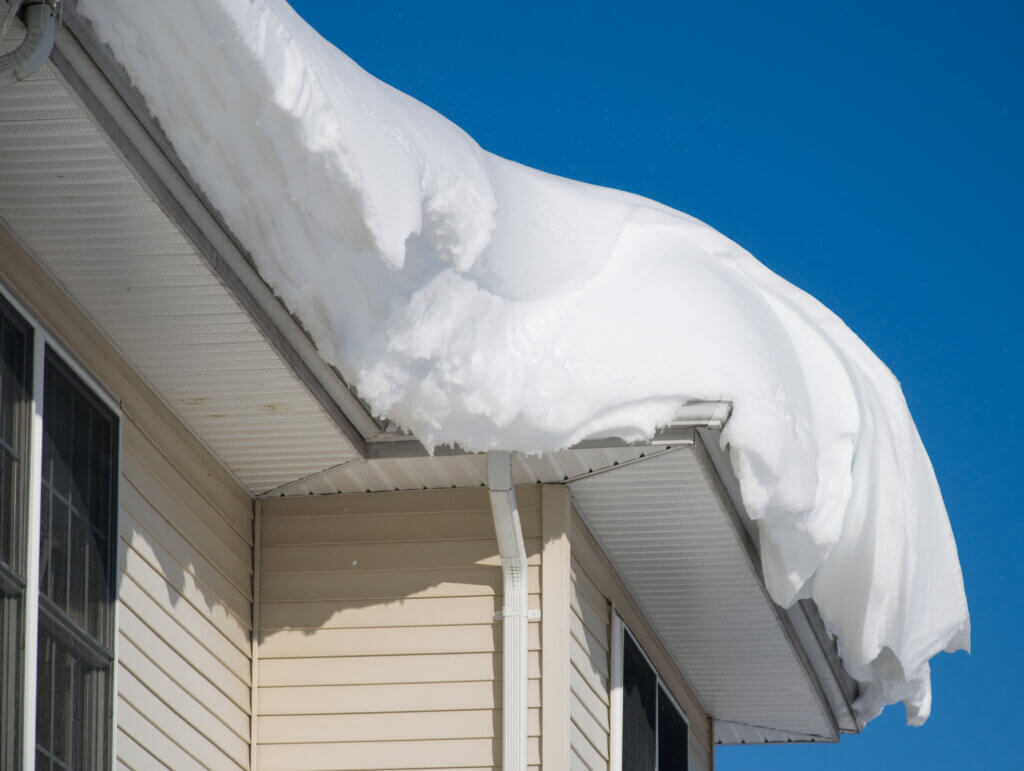
When winter’s icy grip takes hold, one concern that every homeowner should consider is how much snow their roof can handle. We’ve all seen those picturesque snow-covered rooftops, but have you ever wondered when that picturesque scene turns into a potential problem? In this blog post, we’ll delve into the question, “how much snow can a roof handle?” We’ll explore the factors that affect a roof’s snow load capacity, whether you should clear snow off your roof, and how to install snow guards on a metal roof to prevent snow and ice buildup. So, let’s dive into the details and ensure your home stays cozy and safe throughout the winter season.
How Much Snow Can a Roof Handle?
To determine how much snow can a roof handle, specific weight capacities come into play. It’s not a one-size-fits-all answer, as different roofs have varying load capacities. Understanding these figures can help you gauge when it’s time to take action to protect your home. Let’s take a closer look at what influences a roof’s snow load capacity:
1. Roof Type
The type of roof you have plays a significant role in determining its snow load capacity. Typically, residential roofs in the Tri-state area are designed to withstand a minimum snow load of about 20 to 30 pounds per square foot (psf). Pitched roofs tend to handle snow better than flat roofs. This is because pitched roofs allow snow to slide off more easily, reducing the weight burden. On the other hand, flat roofs may have a lower snow load capacity, often around 10 to 20 psf, making them more susceptible to structural stress.
2. Roof Material
The material your roof is made of can also impact its snow load capacity. Different materials have different structural strengths. For example, a metal roof is generally better at shedding snow due to its smooth surface and might have a snow load capacity of 40 psf or higher. In contrast, asphalt shingles can retain snow, adding extra weight to the structure, and might have a capacity closer to the 20 to 30 psf range.
3. Local Climate
The Tri-State area experiences a diverse range of weather conditions. Especially in upstate New York and parts of New Jersey and Connecticut, building codes may require snow load capacities of 40 psf or more to account for the heavier snowfall.
4. Roof Design
The design of your roof also affects its snow load capacity. Roofs with multiple angles, slopes, and supports distribute the snow load more evenly, making them better equipped to handle heavier snowfall. Simple, single-sloped roofs may need more attention and maintenance in snowy areas. A well-designed roof can have a snow load capacity of 30 to 40 psf or higher.
5. Roof Age and Condition
The age and condition of your roof can impact its snow load capacity. An older or damaged roof may be more susceptible to stress from heavy snow, as it may have weakened over time. Regular roof inspections and maintenance can help ensure your roof is in the best possible condition to handle winter weather.
6. Snow Density
Not all snow is created equal. Wet, heavy snow can place more stress on your roof than light, fluffy snow. The density of the snowfall can vary depending on temperature and moisture content. Wet snow, often found in milder winter climates, can accumulate more rapidly and be more challenging for your roof to handle.
Now, you should have a better understanding of what your roof can handle. In the next section, we’ll address the question of whether you should clear snow off your roof, as it’s a decision that should be made carefully to protect your home and ensure your safety.
Should You Clear Snow Off Your Roof?
When it comes to maintaining your home during the winter, the question of whether to clear snow off your roof often arises. The answer depends on several factors, including the snow load capacity of your roof and the current weather conditions. Here are some key considerations to help you decide:
1. Exceeding Snow Load Capacity
If the accumulated snow on your roof approaches or exceeds the recommended snow load capacity for your area, it’s crucial to take action. This is particularly relevant in the Tri-State area, where heavy snowfall is not uncommon. Excessive snow accumulation can place tremendous stress on your roof’s structure, potentially leading to damage or even collapse.
2. Safety Concerns
Another critical factor to consider is safety. Attempting to clear snow off your roof can be a hazardous task, especially for pitched or multi-story roofs. Slipping, falling, or damaging the roof itself are all real risks. If you’re not experienced or equipped for this task, it’s often safer to leave it to professionals.
3. The Right Tools
If you decide to clear snow off your roof, ensure you have the right tools and equipment, such as snow rakes or roof shovels designed for the purpose. Using inappropriate tools can damage your roof or be ineffective.
4. Preventing Ice Dams
In addition to snow accumulation, consider the formation of ice dams. Ice dams occur when snow on the roof melts, then refreezes near the eaves, creating a barrier that prevents proper drainage. This can lead to water seeping into your home. In such cases, it’s essential to clear the lower edges of your roof to prevent ice dams from forming.
5. Professional Help
For most homeowners, especially in the Tri-State area, it’s advisable to seek professional assistance for snow removal. Experienced roofing contractors like JL Roofing & Siding are equipped to assess your roof’s condition, clear snow safely, and prevent damage.
Understanding how much snow can a roof handle is essential, especially in regions like the Tri-State area, where winter weather can be challenging. As homeowners, it’s our responsibility to safeguard our homes and loved ones from the potential risks of heavy snowfall. JL Roofing & Siding’s roofing services, tailored to the specific needs of the Tri-State area, provide the expertise and support necessary to navigate the winter season with confidence.
Whether you’re in Pennsylvania, New York or New Jersey, JL Roofing & Siding is here to help you ensure your roof’s snow load capacity is in check, offering expert roof maintenance, and even the installation of snow guards on metal roofs. With a well-maintained roof, you can enjoy a cozy and secure home throughout the winter, without the worry of snow-related damage. Contact JL Roofing & Siding to keep your roof in excellent condition, so you can experience a worry-free winter.